Source Box Joint Crimping Pliers for Wire Stripping, Cutting, and Punching
Compare 30 Box Joint Crimping Pliers from verified Chinese suppliers. These tools support wire stripping, cutting, and punching functions for building decoration and general electrical applications.
Key considerations
Products List




Comprehensive Sourcing Guide
Strategic Sourcing Guide for Box Joint Crimping Pliers
Understanding the Core Mechanics and Structural Design
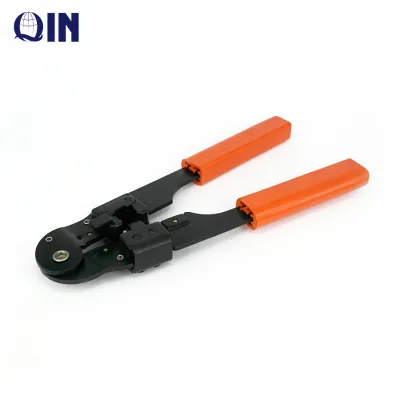
When sourcing Box Joint Crimping Pliers, the primary focus must be on the structural integrity that defines the tool's performance. The "box joint" refers to a specific pivot mechanism where the handles and jaws are connected by a rivet or pin that passes through a box-like frame, rather than a simple overlapping lap joint. This design is critical for heavy-duty applications because it distributes mechanical stress more evenly across the tool's body, reducing the risk of bending or failure under high pressure. In the context of industrial procurement, the box joint structure is often associated with tools designed for "Cutting, Wire Stripping, Crimping, and Punching" functions, indicating a multi-purpose capability that is highly valued in building decoration and electrical installation sectors.
The physical attributes of these tools vary significantly based on the intended load. Observed specifications for similar tools in the market indicate a single unit weight ranging around 1.0kg to 2.0kg, with a single gross weight often recorded at 2.000kg. The dimensions are equally important for ergonomics and storage; a typical single package size for these tools is approximately 55x20x15 cm. The shaft style is predominantly straight, which facilitates leverage and control during operation. Buyers should verify that the specific model they select matches the required handle length and jaw geometry, as the "Common" size designation often implies a standard fit for general-purpose tasks, while specialized models may offer specific length measurements, such as 175mm, for precision work. The material composition is another fundamental aspect; high carbon steel is frequently cited as the material of choice for the handles and jaws, ensuring durability and resistance to wear. Some variations may feature a 60# steel handle material, which offers a specific balance of hardness and toughness.
Technical Specifications and Functional Versatility
The technical specifications of Box Joint Crimping Pliers are not merely descriptive but are functional requirements that dictate the tool's suitability for specific tasks. The core function of these pliers is "Crimping," but advanced models often integrate "Cutting," "Wire Stripping," and "Punching" capabilities into a single unit. This multifunctionality is particularly relevant for applications in "Building Decoration" where space is limited, and efficiency is paramount. The "Effect" of the tool is defined by its ability to create secure mechanical and electrical connections, often described as "Twisting & Cutting" performance in high-stress scenarios.
The "Applicable Object" for these tools is typically "Steel Wire," though the specific gauge and type of wire must be matched to the tool's jaw capacity. The "Type" of tool is often categorized broadly as "Wire Strippers" or "Crimping Pliers," but the specific model number is the definitive identifier for technical compatibility. Market observations reveal a wide array of model numbers, including PL-01, MT-89271, MT-8111, MT-8021-E-9Y, MT-8306, MT-8307, MT-8316, WKC8 10-4, and RS-T568R. Each of these models likely corresponds to a specific jaw configuration or crimping standard. For instance, some models are associated with "8P + 6P + 4P Connectors," indicating a specialization in telecommunications or networking cabling. Buyers must ensure that the model number aligns with the connector types they intend to terminate.
Furthermore, the "Shape" of the tool can vary, with some units featuring a "Sharp Tongue" design for precise insertion, while others maintain an "Ordinary Shape" for general utility. The "Condition" of the product is almost universally "New" in commercial listings, but the "Customized" attribute is a critical differentiator. Many suppliers offer "Customized Support" including OEM (Original Equipment Manufacturer) services, allowing buyers to tailor the tool to specific branding or functional requirements. The "Product Name" often includes descriptors like "Aluminum Sleeve Crimping Pliers," which points to the specific material being crimped, a detail that must be verified against the tool's jaw specifications.
Compliance, Certification, and Regulatory Standards
In the B2B procurement of industrial hand tools, compliance with international standards is non-negotiable. The supply chain for Box Joint Crimping Pliers often involves products that carry a suite of certifications, including CE, ISO, RoHS, FDA, PSE, and CCC. These certifications serve as evidence that the product meets specific safety, environmental, and quality benchmarks. The CE marking, for example, is often linked to the standard "CE 2006/42/Ec," which pertains to machinery safety directives. This is particularly relevant for tools that are considered machinery under European regulations.
The ISO certification is another critical factor, with "ISO9001: 2008" being a specific standard observed in product attributes. This certification indicates that the manufacturer has a quality management system in place that meets international requirements for consistency and reliability. However, buyers must exercise caution; the presence of a certification label does not automatically guarantee that every unit in a batch is certified. The "prod_standard" is often listed as "customized," which suggests that while the base product may meet general standards, specific compliance requirements might need to be negotiated or verified on a per-order basis.
The "Place of Origin" is a significant indicator of the regulatory environment in which the tool was manufactured. Most observed listings indicate origins in "Hebei, China" or "Zhejiang, China." These regions are known for their manufacturing capabilities, but they also imply that the tools must comply with the export regulations of the destination country. For instance, the "PSE" certification is specific to the Japanese market, while "CCC" is the Chinese Compulsory Certification. Buyers importing these tools into regions with strict safety regulations must verify that the specific model carries the necessary local certifications. The "Application" of the tool is sometimes listed as "Not Rated Grade," which is a red flag that requires immediate clarification. A tool intended for professional use should have a clear rating regarding its load capacity and safety limits.
Cost Drivers and Pricing Dynamics
The pricing of Box Joint Crimping Pliers is influenced by a complex interplay of factors, including material costs, manufacturing complexity, certification requirements, and order volume. The observed price range in the market is substantial, spanning from 1 to 320 USD. This wide variance suggests that the product category encompasses everything from basic, single-function tools to highly specialized, multi-functional, and certified industrial-grade equipment. The lower end of the price spectrum likely corresponds to standard models with basic "High Carbon Steel" construction and minimal customization. In contrast, the higher price points are associated with tools featuring advanced features, such as specific connector compatibility (e.g., 8P + 6P + 4P), specialized coatings, or comprehensive certification packages.
The "MOQ" (Minimum Order Quantity) is another critical cost driver, with observed ranges from 1 to 1200 units. For buyers seeking to test the market or fulfill small-scale projects, suppliers offering an MOQ of 1 are highly valuable. However, for large-scale procurement, the ability to order in bulk at a reduced unit cost is essential. The "Selling Units" are typically listed as "Single Item Single," which implies that the base price is for a single tool, but volume discounts are likely available for larger orders. The "prod_packing" method, whether "Carton" or "Box," also impacts the final cost, as specialized packaging can add to the overall expense but may be necessary for protecting the tool during transit.
Buyers should also consider the "Customized" aspect as a cost factor. OEM services, where a supplier produces tools with a buyer's branding or specific design modifications, invariably carry a premium. The "Customized Support" mentioned in product attributes suggests that these services are available, but the cost implications must be factored into the total cost of ownership. Additionally, the "Lead Time" and "Location" of the supplier can influence the final price due to shipping and logistics costs. Tools originating from "Zhejiang, China" or "Hebei, China" may have different shipping profiles depending on the buyer's location, which can affect the landed cost.
Supplier Evaluation and Quality Assurance
Evaluating suppliers for Box Joint Crimping Pliers requires a rigorous approach that goes beyond simply comparing prices. The "Product Name" and "Model Number" are the first points of verification. A reputable supplier should be able to provide detailed specifications for each model, including the exact material composition, dimensions, and functional capabilities. The "Type" of the tool, whether it is a "Wire Stripper" or a "Crimping Plier," must be clearly defined to ensure it matches the buyer's operational needs.
Quality assurance is paramount, especially given the "Condition" of the product is listed as "New." Buyers should request evidence of the manufacturing process, including the "Structure" of the box joint and the "Handle Color" options, which can sometimes indicate different grades of materials or finishes. The "Function" of the tool, such as "Cutting, Wire Stripping, Crimping, Punching," should be tested to ensure that all features work seamlessly. A supplier that offers "Customized" solutions should also provide samples or prototypes for testing before committing to a large order.
The "Place of Origin" is a key factor in supplier evaluation. While "China" is a common origin, the specific province, such as "Hebei" or "Zhejiang," can indicate the level of industrial specialization in that region. Suppliers from these regions often have established supply chains for raw materials like "High Carbon Steel" and "60# Steel," which can lead to more consistent quality. However, buyers must verify that the supplier has a robust quality control system in place to ensure that every unit meets the specified standards. The "Certification" status should be verified through third-party audits or official documentation, rather than relying solely on the supplier's claims.
Typical Applications and Operational Context
Box Joint Crimping Pliers are designed for a wide range of applications, with "Building Decoration" being a primary sector. In this context, the tools are used for installing electrical wiring, securing connectors, and performing various maintenance tasks. The "Applicable Object" of "Steel Wire" suggests that these tools are suitable for a variety of wire gauges, but the specific "Size" and "Length" of the tool must be matched to the task at hand. The "Effect" of crimping is critical in ensuring the integrity of electrical connections, which is essential for safety and performance.
The "Use Place" of these tools extends beyond construction to include industrial maintenance, telecommunications, and automotive repair. The "Performance" of the tool, described as "Twisting & Cutting," indicates its versatility in handling complex tasks. For example, in telecommunications, tools with specific model numbers like "RS-T568R" are used for terminating network cables, while general-purpose tools are used for broader electrical work. The "Application Age" is listed as "Adult," which implies that the tool is designed for professional use by trained individuals, rather than for casual or hobbyist purposes.
Buyers should consider the "Characteristic" of the tool, which is often described as "Ordinary Shape" for general use. However, specialized models may have unique features, such as a "Sharp Tongue" for precise insertion or a specific "Shaft Style" for ergonomic handling. The "Single Package Size" and "Unit Weight" are important for logistics and storage, especially in environments where space is limited. The "Product Name" often includes descriptors like "Aluminum Sleeve Crimping Pliers," which indicates the specific material being crimped, a detail that must be verified against the tool's jaw specifications.
Long-Term Procurement and Strategic Considerations
Long-term procurement of Box Joint Crimping Pliers requires a strategic approach that considers the lifecycle of the tool and the evolving needs of the buyer. The "Customized" attribute offers a significant advantage, as it allows buyers to tailor the tools to their specific operational requirements. This can lead to increased efficiency and reduced downtime. However, customization also introduces complexity in terms of supply chain management and quality control. Buyers must ensure that the supplier can maintain consistency in the customized features over time.
The "Certification" status is another long-term consideration. As regulations evolve, suppliers must be able to update their products to meet new standards. The presence of certifications like "CE 2006/42/Ec" and "ISO9001: 2008" indicates a commitment to quality, but buyers should verify that these certifications are current and applicable to the specific models they are purchasing. The "Place of Origin" and "Lead Time" are also critical factors, as they affect the reliability of the supply chain.
Finally, the "MOQ" and "Price" dynamics must be managed carefully. While low MOQs offer flexibility, they may come at a higher unit cost. Conversely, high-volume orders can reduce costs but require a commitment to a specific supplier. Buyers should aim for a balanced approach that allows for both flexibility and cost efficiency. The "Product Name" and "Model Number" should be tracked consistently to ensure that the correct tools are being procured and replaced when necessary. By focusing on these strategic considerations, buyers can build a resilient and efficient procurement process for Box Joint Crimping Pliers.
FAQs
What certifications do Box Joint Crimping Pliers typically carry?
These tools commonly carry CE, ISO, RoHS, FDA, PSE, and CCC certifications. Specific standards like CE 2006/42/Ec and ISO9001:2008 are often observed, ensuring compliance with machinery safety and quality management requirements for international markets.
Which materials are used for the handles and jaws?
High carbon steel is frequently cited as the primary material for durability and wear resistance. Some variations feature 60# steel handle material, providing a specific balance of hardness and toughness suitable for heavy-duty crimping applications.
Can these pliers perform multiple functions beyond crimping?
Yes, advanced models integrate cutting, wire stripping, and punching capabilities into a single unit. This multifunctionality is particularly relevant for building decoration and electrical installation sectors where efficiency and space are paramount.
What is the typical weight and package size of a single unit?
A single unit typically weighs around 1.0kg with a gross weight of 2.000kg. The single package size is approximately 55x20x15 cm, designed for standard storage and ergonomic handling during operation.
Are customized support and OEM services available for these tools?
Customized support including OEM services is available for buyers needing specific branding or functional modifications. The product attributes indicate that customization is a key differentiator, allowing suppliers to tailor tools to specific requirements.
Which model numbers are commonly associated with these pliers?
Common model numbers include PL-01, MT-89271, MT-8111, and RS-T568R. Each model corresponds to specific jaw configurations or connector types, such as those for 8P, 6P, and 4P connectors in telecommunications.
Where are these tools typically manufactured?
Most observed listings indicate origins in Hebei, China, or Zhejiang, China. These regions are known for manufacturing capabilities, though buyers must verify that specific models comply with the export regulations of their destination country.